1. What is DSIR Recognition?
DSIR Recognition is a formal acknowledgment by the Department of Scientific and Industrial Research (DSIR), under the Ministry of Science and Technology, Government of India. It validates that an organization operates a genuine, functional in-house Research & Development (R&D) unit.
This recognition is significant because it can serve as a prerequisite for various government incentives, including import duty exemptions, access to R&D funding programmes, and establishing the organization's credibility as a research-driven entity.
Learn more about the benefits of DSIR recognition.
2. Who is Eligible?
DSIR recognition is available to Indian companies registered under the Companies Act that operate a dedicated in-house R&D unit. This typically includes:
- Private Limited companies
- Public Limited companies
The organization must be conducting genuine scientific or technological research — not routine quality control, standard production, or general business operations.
Companies generally need to have completed a minimum operational history. However, DPIIT-recognized deep-tech startups may benefit from certain eligibility provisions even if they have been operating for less than three years.
For a detailed eligibility evaluation, visit our eligibility assessment or read our eligibility guide.
3. DSIR Eligibility Checklist
Before beginning the application process, organizations should evaluate whether they meet the following key requirements:
- ✅ Registered as an Indian company under the Companies Act
- ✅ Operating a dedicated, physically separate R&D unit
- ✅ Employing qualified, full-time R&D personnel
- ✅ Conducting genuine scientific or technological research
- ✅ Maintaining separate R&D financial records and project documentation
- ✅ Possessing dedicated research equipment and infrastructure
- ✅ Minimum operational history (with provisions for qualifying DPIIT startups)
Each organization's situation is unique. A professional eligibility assessment can help identify gaps before the formal application begins.
4. R&D Laboratory Requirements
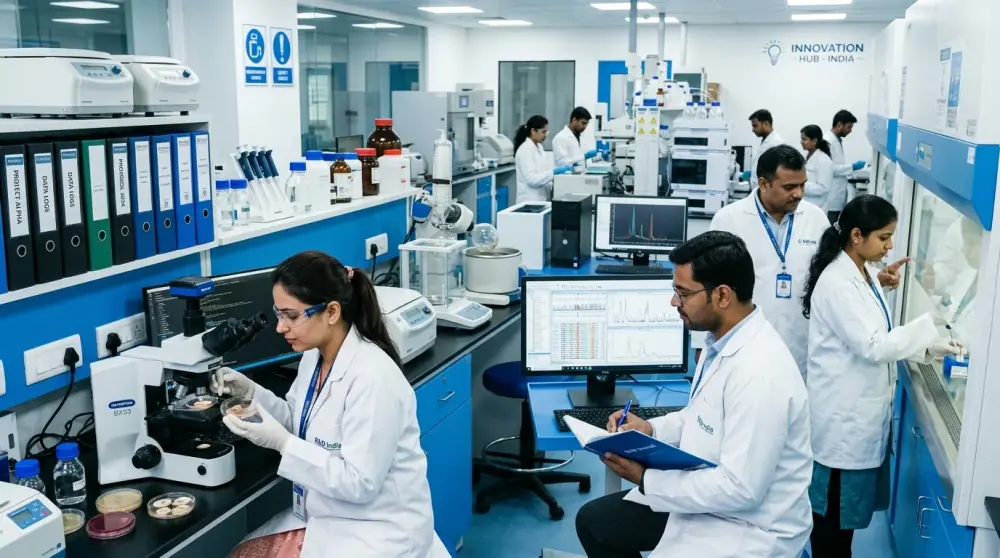
The R&D laboratory must be a physically demarcated space, clearly separated from manufacturing, production, and quality control areas. Key requirements generally include:
- Physical Separation: Clear boundaries (walls, controlled access) separating R&D from commercial operations
- Dedicated Equipment: Scientific instruments, testing devices, prototyping tools, and analytical software specifically allocated to R&D
- Layout Documentation: Architectural floor plans showing the R&D area within the overall facility
- Safety & Compliance: Appropriate safety measures and protocols for the nature of research conducted
The laboratory setup is a critical factor in the evaluation process. Learn more about preparing for the DSIR site inspection.
5. R&D Manpower Requirements
The R&D unit must be staffed by qualified, full-time researchers who are dedicated to research activities. Key considerations include:
- Qualified technical personnel (B.E/B.Tech, M.Sc, M.Tech, Ph.D, or equivalent)
- Researchers must be employed full-time and dedicated to R&D — not shared with production, sales, or administration
- The ratio of technical to administrative staff in the R&D unit is evaluated
- Personnel must be able to explain their research methodology during site inspections
Routine QC staff, production personnel, and administrative employees cannot be counted as R&D manpower.
6. Documents Required
The DSIR application requires comprehensive documentation that presents a consistent picture of the organization's R&D capabilities. Major categories include:
- Corporate Documents: Certificate of Incorporation, MOA, AOA, audited annual reports
- R&D Layout: Floor plans, lab photographs, equipment placement details
- Manpower Records: CVs, qualification certificates, organizational charts
- Equipment & Assets: Invoices, asset registers, serial numbers for R&D instruments
- Project Documentation: Technical descriptions of R&D projects with objectives, methodology, and outcomes
- Financial Records: Separate R&D expenditure accounts (revenue and capital)
For a more detailed overview, see our document checklist.
7. DSIR Application Process
The recognition process involves several stages. While the specific steps may evolve, the general framework includes:
- Preliminary Assessment: Evaluate R&D readiness, infrastructure, and documentation
- R&D Unit Preparation: Ensure physical demarcation, equipment tagging, and personnel readiness
- Documentation Compilation: Organize all required documents into a coherent dossier
- Application Submission: Submit the application through the official DSIR portal
- Scrutiny & Clarifications: Address any queries from the review committee
- Panel Evaluation / Site Inspection: Host the evaluation panel or present R&D work
- Recognition Outcome: Receive the formal approval and certificate
Professional assistance can help organizations prepare thoroughly at each stage, reducing the risk of delays or rejection. Read our step-by-step application guide.
8. Form 3CK
Form 3CK is an important document in the DSIR recognition and R&D tax-related processes. It serves as the official application form and includes detailed information about the organization's R&D unit, activities, personnel, equipment, and expenditure.
Preparing Form 3CK accurately requires attention to detail and consistency across all sections. Inconsistencies between the form and supporting documentation are a common reason for queries and delays.
For a detailed understanding of Form 3CK, read our Form 3CK guide.
9. Site Inspection
The site inspection (or panel evaluation) is a critical phase where the DSIR evaluation committee verifies that the reality of the R&D facility matches the claims in the application. During the inspection, the panel typically:
- Verifies the physical layout and demarcation of the R&D area
- Inspects equipment and checks against the submitted asset list
- Reviews laboratory logbooks and project documentation
- Interviews R&D personnel about their research methodology
Conducting a thorough mock audit before the inspection is strongly recommended. Learn more in our site inspection preparation guide.
10. Common Reasons for Rejection / Issues
Understanding common issues can help organizations prepare more effectively:
- R&D lab not physically separated from production or QC areas
- Insufficient dedicated research manpower
- Weak or unclear R&D objectives and project documentation
- Presenting routine QC or testing as R&D
- Financial inconsistencies between R&D accounts and general ledgers
- Incomplete documentation or missing credentials
- Personnel unable to explain research methodology during inspection
A pre-submission review can identify and address these issues before they affect the application. See our detailed guide on common rejection reasons.
11. Renewal
The validity and renewal requirements applicable to DSIR recognition are governed by prevailing DSIR guidelines and the specific recognition granted to the R&D unit. Renewal is essential to maintain continuous recognition.
Key renewal considerations:
- Plan renewal sufficiently in advance of the expiry of existing recognition
- Document any changes to the R&D unit (personnel, equipment, location)
- Update project documentation to reflect current research activities
- Ensure financial records for the recognition period are complete
For detailed guidance, read our renewal guide.
12. Compliance
After obtaining DSIR recognition, organizations have ongoing compliance responsibilities:
- Maintain the R&D unit in accordance with the approved setup
- Continue structured R&D activities with proper documentation
- Report significant changes (location, personnel, equipment) to DSIR
- Maintain separate R&D financial records
- Submit required periodic reports and filings
Professional compliance support ensures that recognized organizations maintain their status without interruption.
13. Tax Implications
Companies often associate DSIR recognition with R&D tax benefits. It is important to understand that:
- DSIR recognition validates R&D capability — it does not automatically provide tax benefits
- Tax benefits are governed by the Income Tax Act and are subject to prevailing provisions
- Section 35(2AB) of the Income Tax Act contains provisions related to R&D expenditure deductions
- The applicability and extent of tax benefits may change with fiscal policy updates
- Organizations should consult with qualified tax professionals to understand current provisions
For more details, read our guides on DSIR and tax benefits and Section 35(2AB).
Important Distinction
DSIR recognition and tax benefits are related but separate. Recognition does not guarantee automatic tax deductions. Always verify current tax provisions with qualified professionals.
14. Customs Benefits
DSIR-recognized organizations may be eligible for customs duty exemptions when importing equipment, instruments, and materials for R&D purposes. This can include:
- Duty exemptions on scientific instruments and laboratory equipment
- Concessions on chemical reagents, reference standards, and prototype materials
- Benefits under specific government notification schemes
The specific benefits available depend on current government notifications and policies. Organizations should verify applicable provisions when importing R&D materials.
15. Frequently Asked Questions
How long does DSIR recognition take?
Processing time may vary depending on the completeness of the application, review requirements, queries, technical evaluation, and the applicable DSIR process.
Can startups under 3 years apply?
DPIIT-recognized deep-tech startups may be eligible for consideration under certain provisions. Read our DPIIT & DSIR guide for details.
Does recognition guarantee tax benefits?
No. DSIR recognition validates R&D capability. Tax benefits are governed separately by the Income Tax Act and depend on prevailing provisions.
Can foreign companies apply?
DSIR recognition is generally available to companies registered in India under the Companies Act. Foreign companies should evaluate their Indian entity structure and eligibility.
For more FAQs, visit our comprehensive FAQ page.
16. How DSIR INDIA Can Help
The DSIR application involves several eligibility, documentation, technical, and compliance considerations. DSIR India provides professional advisory services to help organizations navigate the process effectively:
- Eligibility Assessment: Evaluate your organization's readiness for DSIR recognition
- Gap Analysis: Identify areas that need strengthening before application
- Documentation Preparation: Structure and compile the complete application dossier
- Form 3CK Assistance: Prepare Form 3CK accurately with consistent supporting information
- Site Inspection Preparation: Conduct mock audits and prepare your team
- Query Resolution: Help address clarifications from the DSIR evaluation committee
- Renewal & Compliance: Ongoing support to maintain recognition status
Need Help With DSIR Recognition?
Our team can help you understand the eligibility, documentation, and application requirements for your organization.
Talk to DSIR India Check Eligibility